Common Composition Mistakes Enthusiasts Make and How to Fix Them
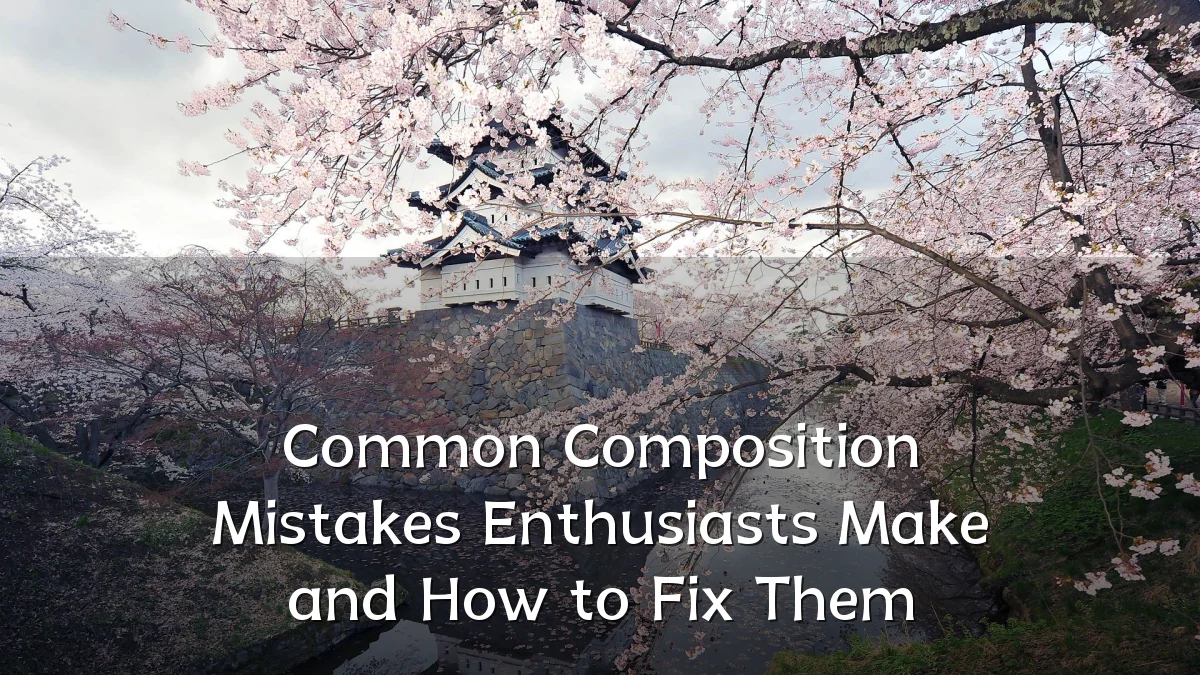
Photography enthusiasts frequently turn to blogs and online communities for guidance on improving their images. Despite the wealth of advice available, certain composition errors remain widespread. This analysis examines recent trends in composition education, the root causes of recurring mistakes, user concerns, the likely impact on image quality, and emerging directions for learning.
Recent Trends in Composition Advice
Over the past few years, photography blogs have shifted emphasis from purely technical settings (aperture, shutter speed) toward compositional techniques. Popular topics include rule of thirds, leading lines, framing, and symmetry. However, the sheer volume of advice can lead to superficial application.

- Rule-of-thirds grids are now built into most cameras and editing apps, encouraging automatic placement without deeper thought.
- Leading line tutorials often show ideal scenarios, leaving users unsure how to adapt to less obvious environments.
- Minimalist and negative space approaches are widely promoted but sometimes misinterpreted as simply “leave empty space.”
- Social media trends (e.g., square crops, central subjects) may conflict with traditional composition guidelines.
Background: Why These Mistakes Are Common
Many enthusiasts start without formal training, learning from bite-sized blog posts or video shorts. This format often oversimplifies composition, presenting rules as rigid rather than flexible tools. Additionally, beginners may focus on a single technique at a time, forgetting how elements interact within the frame. The lack of personalized feedback in self-directed learning can allow errors to become habits.

User Concerns: Identifying the Errors
Enthusiasts frequently report frustration when photographs still feel “off” despite following common advice. The following mistakes are consistently observed in forum critiques and blog comment sections:
- Centering the subject too rigidly – even when the scene would benefit from asymmetry.
- Ignoring the background – concentrating on the subject while letting distracting elements (bright spots, poles, messy lines) remain.
- Overusing the rule of thirds – placing every horizon or subject exactly on the grid lines, leading to predictable compositions.
- Crowding the frame – including too many competing elements without a clear focal point.
- Neglecting the edges – allowing partially cut-off objects or uneven borders that pull attention away.
- Misapplying leading lines – directing lines toward empty space or out of the frame rather than toward the subject.
Likely Impact on Image Quality
When composition mistakes persist, images often fail to hold viewer attention or convey the intended mood. Photos may appear amateur, cluttered, or static. Correcting these errors—through conscious framing, simplifying the scene, and experimenting with placement—can transform a snapshot into a more compelling piece. Even small adjustments, like stepping to one side or waiting for a clearer background, tend to produce noticeable improvement in overall impact.
What to Watch Next
As photography blogs evolve, several emerging approaches may help enthusiasts move beyond repetitive mistakes. Look for content that emphasizes:
- Intentional breaking of rules – explaining when and why to ignore the rule of thirds or other guidelines.
- Color harmony and contrast – treating composition as more than spatial arrangement.
- Geometric and abstract composition – using shapes, repetition, and patterns to create tension.
- Storytelling through sequencing – how a series of images can build a narrative, which shifts composition priorities.
- Feedback-driven practice – interactive online workshops or critique groups that help learners identify their own recurring pitfalls.
In the coming months, expect more blogs to integrate composition with post-processing choices (cropping, cropping tools, and aspect ratio experimentation) as a natural extension of field techniques. The focus is likely to shift from memorizing rules to developing an intuitive sense of balance and visual flow.