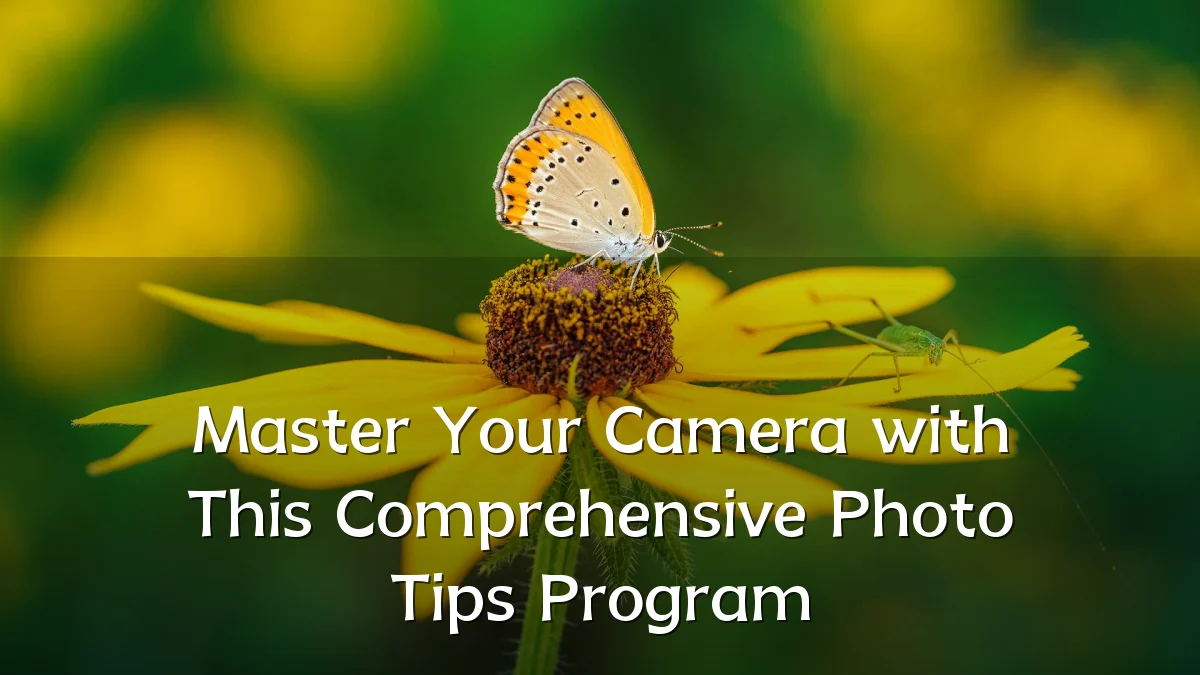
Master Your Camera with This Comprehensive Photo Tips Program
Recent Trends
Over the past several months, interest in structured photography education has risen alongside the proliferation of mirrorless cameras and advanced smartphone camera systems. Social media feeds are saturated with aspirational imagery, yet many users report feeling overwhelmed by manual controls and post-processing options. Search data indicates a steady increase in queries for “photo tips program” and “camera basics course,” suggesting that hobbyists and aspiring creators seek a systematic approach rather than random tutorials.

Background
Traditional photography learning paths often relied on in-person workshops or lengthy textbooks. As digital platforms expanded, a wave of free content emerged—but with inconsistent quality and depth. The idea of a comprehensive photo tips program consolidates foundational theory, camera handling techniques, composition rules, and editing workflows into a single curriculum. This program typically targets intermediate beginners who own a DSLR, mirrorless, or advanced compact camera but haven’t moved beyond auto mode. It builds on established principles—exposure triangle, focal length effects, lighting scenarios—while incorporating modern digital workflows.

User Concerns
- Cost vs. value: Many potential participants evaluate whether a paid program delivers more than free YouTube series or library books.
- Time commitment: Busy schedules raise questions about self-paced vs. scheduled modules, and whether weekly lessons are manageable.
- Practical applicability: Users worry about too much theory without real-world assignments or feedback loops.
- Relevance to gear: Attendees with entry-level bodies or only kit lenses want assurance that lessons aren’t geared toward professional equipment.
- Overlap with existing knowledge: Hobbyists who already understand basic composition fear repetition.
Likely Impact
A well-designed photo tips program can accelerate skill acquisition by providing a logical sequence—moving from exposure to composition to genre-specific techniques (portrait, landscape, street). Participants often report increased confidence in using manual settings, better image selection habits, and reduced reliance on auto-correction tools. For the photography industry, such programs can drive healthier secondhand camera sales and increase demand for accessories (tripods, filters, external flashes) as users outgrow their starter kit. In the longer term, a structured approach may help reduce the rate of “gear acquisition syndrome” by focusing on technique over equipment.
What to Watch Next
- Program updates: Look for additions covering computational photography, AI-assisted editing, or mobile camera workflows.
- Community features: Watch whether the program integrates peer review, live Q&A sessions, or curated photo challenges to boost retention.
- Platform expansion: If the program becomes popular, expect spin-off modules for specific genres (macro, astrophotography, food) or for different camera brands.
- Certification trends: Some programs may begin offering verified completion credentials that users can display on portfolios or social profiles.